by cameron | Sep 14, 2008 | Australian media, Brisbane
I was on a panel yesterday at the Future Of Journalism conference in Brisbane. As you can perhaps tell from earleyedition’s tweets, my comments were not well received. As usual, I tried my best to explain that the economics of media have fundamentally changed and that means all bets are off. But, as usual, nobody listened and I was accused of being a “shock jock” espousing “revolutionary rhetoric”. Jean Burgess from QUT used the old line about “we’ve had technological shifts before and it didn’t cause the end of the industry”, completely missing the point that this is NOT about a technology shift – it’s about an economic shift.
To wit:
Fifteen years ago, if I wanted to publish something to a wide audience, the financial barriers were extreme. The cost of owning a newspaper or magazine were (and still are) very high. So very few people were able to own one. It was a limited playing field. Consequently, the people who *did* own a newspaper had the market to themselves. There was limited competition for people’s attention. As a result, they could carve their local market up between themselves and fund their business through advertising.
However, today, anyone can publish something online. The economic barriers have been removed. Consequently, there are 75 million active blogs that I can read, not 4 newspapers. And so audience attention is fragmenting and the traditional news companies can’t control it. As they lose audience, their ability to generate advertising revenue diminishes. As revenue declines, they can’t afford to maintain their old cost structures, so they start downsizing. Sound familiar? It’s a negative spiral. And there is NO. WAY. OUT.
Anyway, I’d like to thank Antony Funnell from ABC radio’s “Media Report” for doing a great job moderating our panel. He did a good job getting everyone’s views, including the ones that were extremely unpopular.
by cameron | Sep 12, 2008 | Cuba, Uncategorized
Oh yeah I want this!


You can also get the Fidel action figure:

If I had both of them I’d stage re-enactments of the Cuban revolution on my living room floor. I wonder if you can get Batista, JFK, Khrushchev and the Granma as well?
Don’t forget it’s my birthday on Oct 10. With shipping times factored in, you need to order TODAY. It’s time for an outpouring of Cam love.
UPDATE:
Actually this Che figure is even better! He looks badass.

by cameron | Sep 12, 2008 | Australian media, Brisbane, media 2.0
I’m one of the speakers at the “Future Of Journalism” conference here in Brisbane tomorrow, which is kind of amusing as I’m the furthest thing you can get to a journalist. I’m a panelist on a session called “Who is going to pay for journalism?” and my answer is going to be “frakked if I know”.
As I’ve been saying for five years now, this isn’t about blogging versus journalism. This is about the economic model that old media companies prospered under for the last century being defunct. And it doesn’t matter how much bitching or whining journalists do about it, the fact is, the party is OVER.
Now that doesn’t mean we all don’t want great investigative journalism. As a society, we need it. I just don’t know who is going to pay for it. Of course we all know now that privatized investigative journalism is flawed, as is state-controlled journalism, but they are better than nothing.
As I said on Bronwen’s blog the other day, I don’t remember seeing many Australian journalists going out on strike over the last 20 years as the quality of journalism in this country reached ever-deeper lows. I don’t remember reading too many stories in the AGE or SMH about how tabloidy our news was becoming, either. They just shut up, stuck their heads in the sand, and took the money. They fiddled while Rome burned around them. It’s too late to cry foul now kids.
Meanwhile the Newspaper Association of America just reported that total newspaper advertising revenues fell by $3 billion in the first six months of this year to $18.8 billion, the lowest level in a dozen years.
(Thanks Bron for the link).
by cameron | Sep 12, 2008 | US politics
I was thinking about this over breakfast this morning…
Why, in the last sixSEVEN years, hasn’t there been another terrorist attack on the USA?
Perhaps it’s because the Dept of Home Security are doing a bang-up job keeping America safe. However, knowing what we do about how effective America’s intelligence services are (not very), that seems a very unlikely explanation.
The alternative explanation might be that the terrorists don’t need another attack because they’ve already won.
Assuming there really is a guy called Osama Bin Laden, has he won?
Here’s some questions to ask yourself:
1. Is America’s reputation abroad stronger or weaker today than it was pre-9/11?
2. Is America’s economy stronger or weaker today than it was pre-9/11?
3. Is America’s internal political climate more or less divisive today than it was pre-9/11?
4. Does America have more or less enemies today than it did pre-9/11?
BONUS QUESTION:
5. What would most Americans say the reason for the 9/11 attacks was?
I’m guessing a poll would show most think “they hate our freedom” is the answer. FAIL. I suspect most Americans have learned nothing from the last six years.
Meanwhile Americans deaths in Afghanistan hit a new high, while the US bombs Pakistan.
Meanwhile Russia sends TU-160 Blackjack bombers to Venezuela, reminding me of the Cuban missile crisis.
Before the war, White House economic adviser Lawrence Lindsay estimated the cost at $100 to $200 billion. So the White House got rid of him and “re-estimated” the cost at $50 to $60 billion. It’s going to end up costing over $3 TRILLION.
That’s $3 trillion of taxpayers money that would be going to healthcare, to creating alternative sources of renewable energy, or to developing better relationships with countries around the world. It’s $3 trillion that is, instead, making certain American weapons manufacturers, military contractors and construction companies, very wealthy, while the US unemployment level is at a five-year high and employment growth is the weakest since the Great Depression.
I submit to you that if bin Laden’s objective was to hurt America, he has already won.
by cameron | Sep 12, 2008 | Christianity, Podcast
My guest today is Robert M Price, a Professor of Theology and Scriptural Studies at the Johnnie Colemon Theological Seminary in Miami Gardens, Florida. He is a fellow of the Jesus Seminar and the author of many books and articles on religion. Some of you may remember Robert from his appearance in the documentary The God Who Wasnt There.
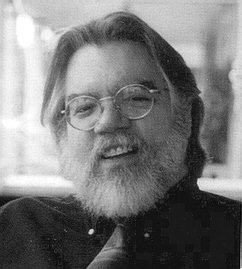
Robert joins me today to examine the historical case for Jesus. We examine the evidence for the standard arguments Christians have for believing that Jesus existed:
- Are the New Testament Gospels or Paul’s letters really eyewitness accounts of Jesus’ life?
- Are there any non-Christian contemporary accounts of Jesus’ life?
- Is there any evidence for the Resurrection?
- Is it true that there is more evidence for Jesus than any other person in history?
- Is it logical that because we have multiple versions of Jesus’ life that is must be true (what is known as the “multiple attestation” argument)?
- If Jesus didn’t exist, why does everybody think he did?
You can find out more about Robert on his site and you can listen to his podcast, The Bible Geek.
This show is the long-awaited follow-up to my interview with Australian Christian historian and theologian John Dickson that I did in January 2007.
Please support the show by throwing me some cash to cover the bills or, if you’re tight on the cash front, by blogging or Twittering about the show or joining the G’Day World Facebook group. There is a list of things you can do to support the show here.