by cameron | Apr 14, 2007 | environment, Melbourne, Uncategorized
I had the fortune last night to be invited to Peter Ellyard’s 70th birthday party at SOS, a sustainable and ethical restaurant at Melbourne Central with an amazing view over the old Melbourne Museum. I’m guessing there were about 100 people there from different sides of Peter’s life – his family, colleagues and friends. It’s was a terrific night and the tributes to Peter were all heart-warming (even mine). I had a series of engaging and vibrant discussions with a group of intelligent, articulate people from various walks of life I consider new friends, including Lauren (a Rhodes scholar), Felix (a self-described “70-year-old French Jew” who spent 30 years living in a kibbutz in Israel), Felix’s wife Shoshanna who is a philosopher/artist/educator who successfully fought off several of us who wanted to debunk the documentary she recently watched on memories transmitted through heart transplants, Ralph, a surgeon, his wife Patsy, an editor, and many others. My good mate Anthony, the guy who introduced me to Peter, was there, as was Diane, the masseuse at the Como Building in South Yarra who apparently originally introduced Peter to AJ and, coincidentally, has massaged all three of us at one point in time (separately, I might add) over the years.
ANYWAY… many of the tributes during the evening talked about Peter’s overwhelming generosity to everyone in his life. I’ve certainly been touched by this in the couple of months I’ve known him. He seems to operate on the principle that the more you give of yourself, the more will come back to you.
It reminded me instantly of a section in Buckminster Fuller’s book “Critical Path” which I was reading earlier in the day. Fuller described this principle, which I’ve learned to think of over the years as “The Principle of Reciprocity” as “precession”. He defined “precession” as “the effect of bodies in motion on other bodies in motion”. Precession was his answer to his own question “How do you obtain the money to live with and to acquire the materials and tools with which to work?”. This was the beginning of his mission when he was effectively bankrupt. His examination of the world around him lead him to believe that bodies in motion exert right-angle effects on other bodies around them. For example, the gravitational effect one planet has on another is at right-angles to the direction of motion of the planet (okay, so my simplistic understanding of the general theory of relativity would suggest that it’s actually the other way around… the warping of space-time that the mass of body A has causes body B to travel in a certain directional orbit around it… but let’s leave that aside for the time being, okay?). Drop a stone in a still pond and the concentric rings spread out at ninety degrees to the motion of the stone.
Fuller theorized that while most humans had, historically speaking, spent most of their energy trying to selfishly earn a living for themselves, some of them had, inadvertently, helped “nature” progress by making huge leaps in the standard of human civilization. These advances were “side effects” of the primary objective of being selfish.
He wrote:
“Therefore, what humans called the side effects of their conscious drives in fact produced that main ecological effects of generalized technological regeneration. I therefore assumed that what humanity rated as “side effects” are nature’s main effects. I adopted the prescessional “side effects” as my prime objective.”
What if, instead of working with the objective of your own comfort, you worked purely for the betterment of the human race? Would, perhaps, your own comfort be taken care of by “nature” in some sort of principle of reciprocity?
Fuller wrote:
“”Since nature was clearly intent on making humans successful in support of the integrity of eternally regenerative Universe, it seemed clear that is I undertook ever more humanly favorable physical-environment-producing artifact developments that in fact did improve the chances of all humanity’s successful development, it was quite possible that nature would support my efforts, efforts, provided I were choosing the successively most efficient technical means of so doing. Nature was clearly supporting all her intercomplementary ecological regenerative tasks – ergo, I must so commit myself and must depend upon nature providing the physical means of realization of my invented environment-advantaging artifacts. I noted that nature did not require hydrogen to “earn a living” before allowing hydrogen to behave in the unique manner in which it does. Nature does not require that any of its intercomplementing members “earn a living”.”
Now I don’t want to sound all “The Secret” on you, but there does seem to me to be a principle that, put simply, “if you do good things, good things happen to you”. Karma without the reincarnation. From the moment I started TPN, I had this feeling that this was an important mission. I’ve always felt like I had a purpose. And, that if I did it properly, worked hard, was focused, disciplined, and did it with integrity, that “good things would happen”.
I don’t expect miracles. I don’t expect things will always fall into my lap. But I do believe (not very scientific of me, i know) that if I pursue the right vision, diligently, honestly, and work my ass off, that perhaps I am merely fulfilling the purpose the Universe has for me. Now, again, I’m not suggesting that the Universe is “intelligent” or that there is some sort of mystical “higher power” that “has a plan” for me.
But… humans are made from atoms. Atoms obey the laws of physics and chemistry. Could you say that an atom of oxygen, connected to two atoms of hydrogen, has the purpose of being water? At the moment in time when you observe it as a water molecule, isn’t that it’s purpose? And up a level, on a macro scale, what is the purpose of that molecule of water? To make a cell function? To provide life-giving nutrients to an animal or plant? And that plant, what is its purpose? To feed me?
In the great chain of “purpose”, with every component of the Universe fulfilling its individual task, am I not merely a bunch of atoms, each of them obeying the laws of physics and chemistry? Am I, then, not also obeying the laws of physics and chemistry? Perhaps I, like the oxygen atom, have a role to play, determined, not by some mystical being, but by the laws of physics and chemistry.
Peter Ellyard is fulfilling his role, as mentor and futurist and leader. As he has done that diligently over his lifetime, he has obviously been rewarded in a variety of ways.
If I fulfill my purpose, which I see today as being a cog in the human evolution machine, dragging us an inch closer to the realization of our potential as a species, perhaps the Universe will continue to rise up and support my efforts, naturally and effortlessly?
by cameron | Mar 31, 2007 | Christianity, Iraq, Podcast, science vs religion
Greydon Square is the future of hiphop.

Raised an orphan by Seventh Day Adventists in Compton, Los Angeles, he did time at 17 for possession of a weapon, then joined the US Army for a tour of Iraq, where he did bible group in his spare time with a view to becoming a minister after he was discharged. However, the more he learned about Christianity, the more he questioned it.
Today he is studying cosmology and quantum physics at University and self-producing his own hiphop album with a powerful message – that rational thinking is superior to religion and faith.
If you enjoyed this podcast, make sure you don’t miss future episodes by subscribing to our feed and leave us a voice comment!
The G’Day World Theme Song is “Save Me†by The Napoleon Blown Aparts.

by cameron | Mar 29, 2007 | censorship, Iraq
Here’s a classic.
I’m currently reading a book at bedtime to the boys. It’s called “The Orchard Book Of Swords, Sorcerers and Superheroes”.
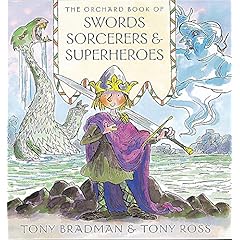
It has kids versions of classic tales, like King Arthur, Jason and the Argonauts, Ali Baba, etc. Tonight we were reading “Aladdin”. All of the usual things are in there, Aladdin, the magic lamp, the genie, etc. The only surprising thing was that the whole story was set in… CHINA.
A few times in the story it says they are in China. I’m scratching my head while I’m reading it, thinking “surely this was set in Persia”. The characters are all wearing turbans, etc.
After I finish and tuck the boys into bed, I turn to the front cover of the book to see when it was printed – 2003. The year we invaded Iraq. The book was printed in London.
AHA!, I think. I’ve uncovered censorship in children’s literature! The publishers didn’t want to mention Baghdad when we’re bombing the crap out of it so they re-set the story!
And so I start to write this post.
Except… when I go to Wikipedia to confirm the original location of the story, I read this:
Aladdin (a corruption of the Arabic name AlÄa ed-DÄ«n, Arabic: علاء الدين literally “nobility of faith”) is one of the tales with a Syrian origin in The Book of One Thousand and One Nights, and one of the most famous.
The “China” of the original tale much more closely resembles the medieval Muslim world of the other Arabian Nights stories, so much so that in retellings the “Chinese” element is often quietly forgotten.
The story concerns an impoverished young ne’er-do-well named Aladdin, in a Chinese city, who is recruited by a sorcerer from the Maghreb in the far west….
Well I’ll be….
by cameron | Mar 20, 2007 | censorship, climate change, environment, freedom of speech, US politics
From the LA Times’ coverage of the Hansen case:
James Hansen, director of the Goddard Institute for Space Studies in the National Aeronautics and Space Administration, took particular issue with the administration’s rule that a government information officer listen in on his interviews with reporters and its refusal to allow him to be interviewed by National Public Radio.
“This is the United States,” Hansen told the House Oversight and Government Affairs Committee. “We do have freedom of speech here.”
But Rep. Darrell Issa (R-Vista) said it was reasonable for Hansen’s employer to ask him not to state views publicly that contradicted administration policy.
Of course, the most shocking suggestion here is that the Bush administration has a policy? Who knew!?
The suggestion that a senior scientist on the government payroll should not be able to talk openly about his scientific views because they might contradict administration policy is absurd. The dangerous theory here that Issa wants to sell is that the Government is a regular employer who should be able to determine what is said publicly by their “employees”. This theory fails to recognize that ALL Government employees and actually employees of the PEOPLE, paid for by THE PEOPLE, and their first (and only) duty is to fulfill their public responsibility, not to toe the line.
By the way, know where the term “toe the line” comes from?
According to the Grammar Tips site:
The phrase “toe the line” is equivalent to “toe the mark,” both of which mean to conform to a rule or a standard. The Oxford Dictionary of Word Histories (Oxford: Oxford Univ. Press, 2002; ed. by Glynnis Chantrell) says, “The idiom toe the line from an athletics analogy originated in the early 19th century”.
The specific sport referred to is foot-racing, where the competitors must keep their feet behind a “line” or on a “mark” at the start of the race–as in “On your mark, get set,
go!”
So one who “toes the line” is one who does not allow his foot to stray over the line. In other words, one who does not stray beyond a rigidly defined boundary.
by cameron | Mar 17, 2007 | environment, Melbourne, Podcast, Uncategorized
The last good boss I had at Microsoft, Christophe DuMonet, left there just before I did (causing me all sorts of political problems but, in retrospect, I’m glad he did) and spent a few years as General Manager of a software division of Sydney-based software company Unique Software. He’s now taken a new position as Managing Director of the Australian office of French software company Esker, “the world’s leading document process automation solutions provider”. Hopefully this means he now has the budget to do engage a good podcast consultant. 🙂
I’m trying to think of what I learned from my time working for CD. He’s certainly a snappy dresser. And he’s this mad triathlete. Neither of those rubbed off on me. He tried to convince me I should play the political game at Microsoft, but I never really could get my ego out of the way. I’d rather say what I think and get condemned for it than pander to morons. It’s a low self-esteem issue I guess. People with healthier self-esteems are prepared to play the game to get what they want. I struggle.
We certainly had some good times though. I remember when we discovered we had some leftover marketing budget which needed to be spent before the end of the financial year and I came up with the idea of getting our top CIO clients and taking them out to the Flower Drum, one of the world’s best Chinese restaurants, for a monthly confab. That was a big hit. I figured we’d get more value out of letting our top customers eat and drink well and chat to each other about the Microsoft-related projects they were doing than trying to SELL them. They sold each other. Halfway into the third bottle of merlot, they would be inviting each other over to their offices to check out the cool stuff they were building using our tools.
Then there was the time we took one of our best customers, let’s call him Tony, and we hired a stretch limo and spent the day driving around Melbourne’s wine district, visiting wineries, eating, drinking, and sharing war stories. Great bonding stuff. How else do you get 8 hours with a CIO? Tony ended up one of our most loyal and valuable clients and a good friend.
But they were all my ideas. What did Christophe do? He backed me up. He gave me support to get the job done. Isn’t that the most important role of a good manager? Creating an environment where their people can do what they need to do without the rest of the company getting in their way?
His final act as my manager was to fight to get approval for me to spend a couple of weeks in New York at Cornell University’s supercomputing lab. At the time I had this vision for Microsoft in Australia to work with Universities to build out massively-parallel supercomputers using Windows Server 64-bit running on blades. We had training budget to spend and I said I wanted to go to Cornell to find out how they were doing it. Our boss didn’t want it to happen (mainly because he hated my guts) but CD made it happen. And although I left Microsoft not long afterwards and never had the chance to realize the vision, the trip to Cornell was a great experience and I’m sure I will use what I learned there at some stage in the future. And it wouldn’t have happened without Christophe’s support.
So for that Christophe – thanks mate. And congrats on the new job.
by cameron | Mar 5, 2007 | Australian media, Australian politics, censorship, Podcast, US politics
My guests today are Dr Kris Klugman PhD and Bill Rowlings from Civil Liberties Australia. I invited them onto the show to help me understand what’s happening with a variety of civil liberty matters such as:
David Hicks
Dr Phillip Nitschke’s book
Attorney-General Phillip Ruddock
Banning of Muslim books
Sedition and other “anti-terrorism” laws passed in Australia
The use of fear as a tool of manipulation
Free Speech
An Australian Bill of Rights
The troubling rise of the Christian Right in Australia
Gay marriage
If you are troubled, as I am, by these issues, then get off your backside and DO something about it. Join the CLA, write a blog, record a podcast, run for politics, create some street art, just DO SOMETHING non-violent. Don’t get sucked into this bullshit mindset of “what difference does it make?”. That’s what “they” want you to think. Remember – you boil a frog slowly.

If you enjoyed this podcast, make sure you don’t miss future episodes by subscribing to our feed and leave us a voice comment!
The G’Day World Theme Song is “Save Me†by The Napoleon Blown Aparts.