About 2 months ago I stumbled onto the Reddit group /r/keto. After reading story after story like this one, from people who lost a huge amount of weight in a fairly short time (6 – 12 months) following the keto diet, I did some research of my own and decided to give it a go.
Now, I’m not a massive guy, but I’m still about 20 – 30 kgs heavier than I should be. I’m 186cms and was about 106kgs (233lbs).
In the first 30 days, I lost 10kg and 10 cms off my waist. That’s 10% of my body weight for those of you not great at maths.
In the second month, I’ve stabilised, which I’m not complaining about, but I still want to lose more, so I’ve been learning more about the diet.
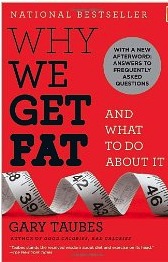
Last night I finished reading a book called “Why We Get Fat” by Gary Taubes, a respected science journalist. Taubes believes that our whole approach to weight control since the 1960s has been fundamentally flawed. The food pyramid is broken.
Essentially, Taubes argues that the science demonstrates overwhelmingly that what makes us fat is eating sugar and carbohydrates (rice, pasta, bread, flour, etc). The cure? Stop eating sugars and carbs. Get most of your calories from fat and protein.
Sounds crazy, I know. But that’s how I lost 10kgs in 30 days. It’s how many people on /r/keto have lost 30 – 50kgs in a year. It’s similar to the Atkins and Paleo diets (which I knew nothing about before I started this).
Taubes’ book explains the science and history of obesity in great detail and it’s pretty compelling. I won’t go into it here in any depth, but basically it breaks down like this:
1. When we eat carbs and sugar, our bodies produce insulin.
2. Insulin tells your cells to store most of the calories that you’ve just eaten for later as fat and to burn what’s left to provide the body with energy.
3. Unfortunately, because most of the calories we’ve just eaten get stored as fat, we get hungry again quickly – and we eat more carbs. The cycle continues. More fat gets stored, we get hungry, rinse and repeat.
4. Exercise is good for you – but has little to do with losing weight. It’s mostly about hormones and carbs.
The solution, according to Taubes and /r/keto, is to eat a low-carb, high fat diet. Basically cut your carbs and sugars back to 20 – 50 grams a day from all sources – which equates to making carbs responsible for about 5% of your calories. The rest of your diet should be fat, protein and leafy greens. Think: eggs, bacon, steak, cheese, cream (instead of milk) and green veggies (lettuce, cabbage, celery, broccoli, etc).
This kind of diet will no doubt be old news to many of you but, for me, it’s already made a huge difference. I’m 10% lighter, have more energy to burn, fitting into old clothes, etc. If you’re the kind of person who struggles to lose weight, I suggest you look into it.
Everyone will have questions about nutrition and health, but Taubes deals with them all in the book. If you’re at all interested, either buy his book, spend ten minutes reading through /r/keto, or watch the first ten minutes of this video interview with Taubes.
I’m an Evernote junky. I live in Evernote and have done since I first discovered it on September 11, 2008. As someone with a terrible memory chip, I use Evernote as my plug-in brain. It stores everything I see, hear, read and every idea I ever have.
One of the problems I’ve been dealing with lately is trying to record audio notes into Evernote while I’m driving. I don’t know about you, but for some reason I have lots of ideas while I’m sitting behind the wheel. And I need a quick way to record them before they disappear forever. Even though Evernote’s iPhone app has an audio record function, it’s too clunky to get to while driving. You have to
1. Turn on your phone.
2. Find the Evernote app and click on it to open.
3. Wait a few seconds for it to load.
4. Click the tiny plus button in the top right-hand corner to create a new note.
5. Click in the body of the note to activate the recording functions.
6. Click the tiny and almost invisible audio recording button at the top of the screen.
7. Record what you want to say.
8. Hit the tiny “done” button in the top right-hand corner of the screen.
9. Hit the “Close” button to save the note.
If I went through this process every few minutes while driving, I’d survive about a week.
So I was looking around for an iPhone audio app that would allow me to record and sync with Evernote with one click. And I think I’ve found it.
It’s called Siri.
First I made sure that my Evernote “Email Notes to” address was listed under my Contacts app as “My Evernote”. Now I can just activate Siri and say “Email to My Evernote……” and tell it what to say. Siri asks if I want to send it, I say yes and I’m done.
Added benefit: I don’t need to transcribe the note when I’m back in Evernote on my Macbook – Siri does the work for me!
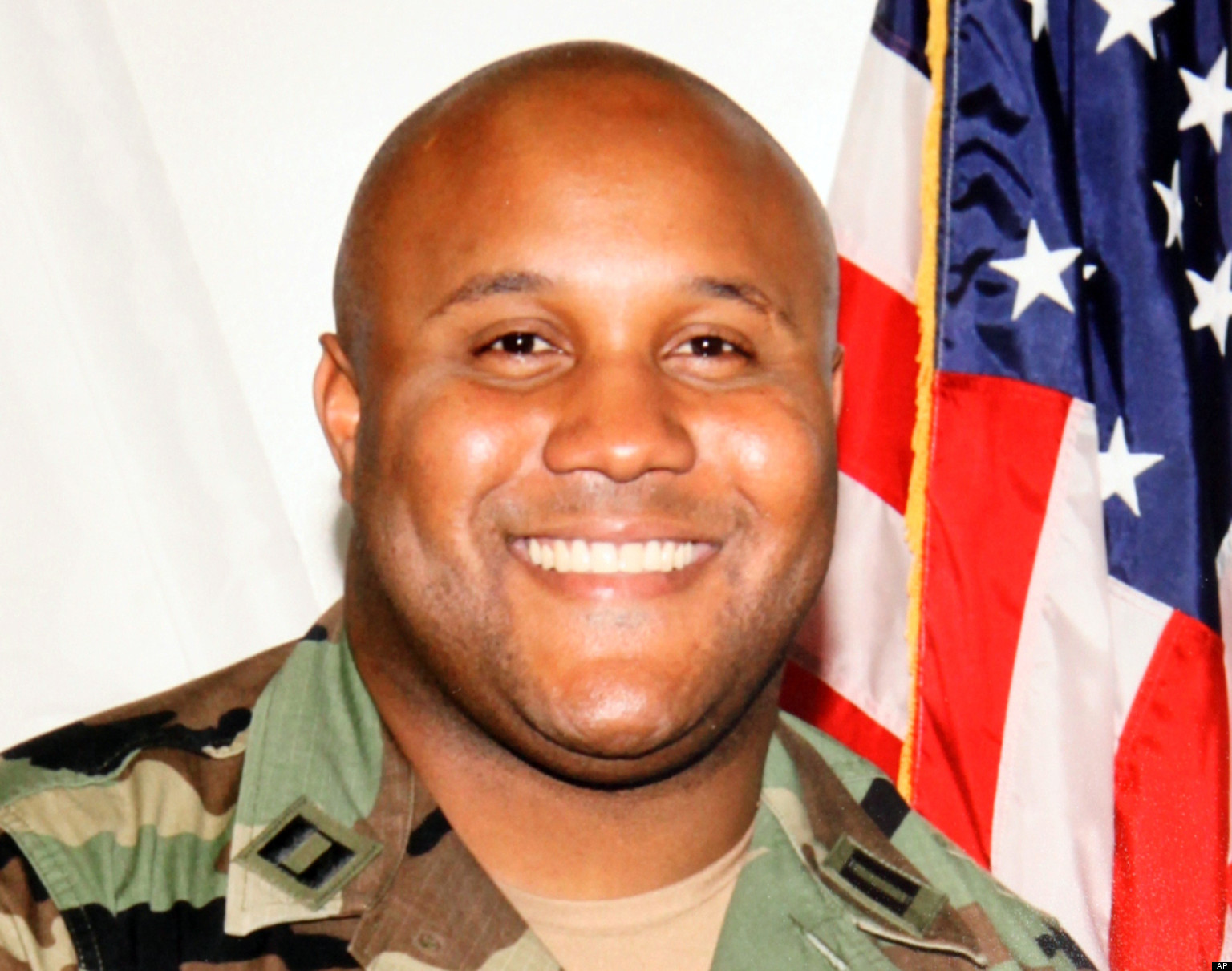
So it appears that ex-LAPD cop Christopher Dorner bought the farm yesterday, either burned alive or shot dead (either at his own hand or at the hands of the cops), according to most media sources. What has fascinated me about this story are the parallels between Dorner’s actions and those of the United States as a nation.
From what I can tell, Dorner was the embodiment of US foreign policy. He killed innocent people? The USA does that almost every single day. Dorner did it as part of his campaign against corruption and violence in the LAPD. The USA does it as part of their campaign against people who don’t like America’s control of the Middle East.
Do we have one set of rules for the State and another for individuals within the State?
Of course we do – the State is allowed to own an army. Citizens are not. Unless, of course, you are Blackwater / Xe / Academi, then you can own a private army and lease it back to the State. But that’s another story.
However even in these scenarios, where we (the people) grant the State the ability to have means of violence that are withdrawn from citizens, we expect the State to obey certain precepts – process, morals, ethics and integrity with how they use the violent forces under their command.
The United States government, however, tends to be pretty loose with how it exercises it’s forces. Up until recently, for example, the Obama administration didn’t even admit to using drones to kill civilians, let alone provide any transparency with the legal framework supporting it.
Of course, the fact that the US kills innocent civilians with drones or troops or private contractors doesn’t make it right. It does, however, provide US citizens with a moral framework to operate from. If it is okay for Uncle Sam to treat civilians as collateral damage and ignore legal process, isn’t it justified for citizens to do the same?
If the USA can assassinate Osama bin Laden without trial or proof of his alleged crimes, is it wrong for a citizen to assassinate corrupt cops?
In a country where a large percentage of the population argues for the right for individuals to own weapons so they can protect themselves against tyranny, Dorner tested the model. Here’s a guy with weapons, with military and police training, who still lasted only a week against the forces of tyranny. I didn’t see his brothers-in-arms rising up to defend him, either. What’s the point of having the “right to bear arms” against the forces of tyranny when you don’t use them to defend someone who is fighting tyranny?
Which is why I think they folks who love their 2nd Amendment are mostly full of shit and cowards to boot.
The media’s treatment of Dorner is interesting, especially when compared to their treatment of US foreign policy. For example:
CNN: Public fascination with and endorsement of an anti-hero is common in history and the arts, especially when the figure advances a political message that resonates with people, experts said. “He’s been a real-life superhero to many people,” said Marc Lamont Hill, an associate professor of English education at Columbia University. “Don’t get me wrong. What he did was awful. Killing innocent people is bad.
Killing innocent people is bad… unless you are the President of the United States. Then it is justified.
In the wake of the Newtown shootings, a variety of people are trying to connect violent video games and mass murder. Like most 12 year old boys, my sons love playing FPS games on the Xbox. Their mother and step-mother aren’t big fans of allowing this, which means I’m out-voted, so I have limited what they can and can’t play over the last few years, much to their chagrin.
Like everyone else in my generation, i grew up watching violent films and playing video games. Obviously the technology has changes a lot over the last ten years, and playing Black Ops II is a world away from playing Frogger or Doom, Wolfenstein and Duke NukeEm which were available when we were in our 20s. But the same Chicken Little cries that video games are making kids violent is what we heard about Arnie movies and rap music in the 80s.
Now I love violent movies, the bloodier and gorier the better. I love rap music too, particularly of the NWA / Dr Dre / OG variety. Yet I don’t have a violent bone in my body. I also love classical music, art, poetry, philosophy, art-house films, Shakespeare and kittens. But perhaps I’m the anomaly?
So I keep an eye on the research every few years, looking to see if there is a conclusive link between violent movies and games and violence in real life.
Significant harmful effects from VVGs have not been persuasively proven or disproven.
There is some consensus that VVGs may be harmful to certain populations, such as people
with aggressive and psychotic personality traits. Overall, most studies have consistently
shown a small statistical effect of VVG exposure on aggressive behaviour, but there are
problems with these findings that reduce their policy relevance. Overall, as illustrated in this
review, research into the effects of VVGs on aggression is contested and inconclusive.
The report suggests that the evidence shows that kids with aggressive family situations or prior aggression of any kind may be more affected by VVGs than other kids, which makes sense.
If there was a correlation between video games and violence, we should see similar levels of violence in all countries where video games are popular – which is ALL of them. And that just isn’t the case. Levels of violence have been dropping in most countries over the last couple of decades – the United States being a major exception.
Dr Christopher Ferguson, associate professor of psychology and communication at the University of Texas,
1. There is no conclusive evidence that violent video games lead to aggression or violence.
2. People suggesting that they do are either a) ill-informed or b) trying to distract people from the real issues driving mass shootings in the USA – easy access to semi-automatic weapons and ammunition and lack of access to mental health treatment.