2024-12-01

Mungable Politics

It’s amusing to me how mungable the political spectrum is in the United States.

On one hand, you’ve got Republicans passionate about Trump appointing Elon and Vivek to remove government regulations with the DOGE. Because government regulations are bad, mmkay?

Meanwhile, they are also excited about RFK jr’s plans as the incoming Health Secretary “for greater regulation of food additives and ultraprocessed foods”.

Regulation over here = bad. Regulation over there = good.

It just goes to show you that Trump doesn’t really have a position on regulation. It’s a tool that should be used or prevented on a basis to be determined by “what sells”.

And just to show it isn’t only the Republicans who have mungable positions – the Democrats in the U.S.A. have been wanting more regulations on food additives for years but doing little about it when they had the chance. Now they are up in arms over the appointment of RFK jr. And while I agree that many of his positions are bonkers, and even a broken clock is right twice a day, you should at least be able to agree with people from the other side when they say something that makes sense.

Like, for example, Trump saying the U.S.A. should stop supporting Ukraine. I’ve talked about this for years on the Bullshit Filter, but you should also listen to these recent interviews with Scott Horton on Greenwald and Jeffrey Sachs on Useful Idiots who explain the background in lots of detail.

People keep asking me whether or not I think Trump is really anti-war. I don’t think he has a firm position on that, either. I think he’ll do whatever suits his private interests or the interests of his biggest supporters. He’ll probably lower U.S. support for their sneaky takeover of Ukraine but increase support for Israel’s genocide, and at some point attack Iran again.

Like his position on TikTok (wanting to ban it during his first term, then wanted to support it when one of their biggest investors became one of his biggest supporters), everything is mungable. Trump‘s strategy seems to be “let’s go find out what people are angry about or passionate about and then just say we’re going to fix that”, and in doing so, he’s managed to take over the Republican Party and turn it into a new party which has managed to grab the working class vote as well as various progressive positions like bigger regulations on health and food and ending the war in Ukraine. It’s really incredible to watch play out.

Elon and his Messiah Complex

My boys and I were talking this morning over chess about Elon and his messiah complex. We’re convinced that he thinks it is justified to do whatever he has to do (including help get Trump elected) in order to move fast enough with his plans to save the human race from extinction. In philosophy it’s called “consequentialism”. I talked about the idea of ‘consequentialism’ in The Psychopath Epidemic:

Soviet leader Josef Stalin’s “Great Purge” and his collectivization of the Soviet agricultural sector might be examples of consequentialism. His desire to force the Soviet Union into a more productive economy and to rid her of internal counter-revolutionaries (real or imagined) may have, in his mind, justified breaking a few—or a million—eggs. He might have concluded that it was better that a million people should go to the gulags than have two hundred million people starve or murdered during the next invasion. As it turned out, when the Germans invaded the Soviet Union a few years later, only twenty-seven million Soviet people died, thanks partly to Stalin’s push for rapid industrialization in the previous few years.

The dropping of atomic bombs on Japan during World War II, resulting in the death of hundreds of thousands of civilians, is often rationalized by people in the United States as being necessary to prevent a land invasion of Japan, which would have potentially led to even more deaths. Earlier in WWII, the RAF and USAF dropped hundreds of thousands of phosphorus bombs on civilian centers in Germany —650,000 on Dresden alone. Tens of thousands of innocent people died, mostly women and children noncombatants, “simply for the sake of increasing the terror,” according to British Prime Minister Winston Churchill. Of course, this was justified as a means of helping the Allies win the war.

From 1990 until 2003, the United Nations imposed debilitating economic sanctions on Iraq, resulting in the deaths of between 500,000 and 1 million people (depending on which source you believe)—half of them children. Denis Halliday, the appointed United Nations Humanitarian Coordinator in Baghdad, resigned in 1998 after a thirty-four-year career with the UN, saying, “I don’t want to administer a program that satisfies the definition of genocide.” Halliday’s successor also resigned in protest, calling the effects of the sanctions a “true human tragedy.” The stated aim of the sanctions was to eliminate Iraq’s weapons of mass destruction. When asked by Lesley Stahl of CBS News if the price of 500,000 dead children was worth it, former U.S. Secretary of State Madeleine Albright, who at the time was Bill Clinton’s UN Ambassador, replied, “I think this is a very hard choice, but the price—we think the price is worth it.” Although the total number of dead children is now debated, Albright’s response, to a number she apparently accepted at the time, is the point.

For Elon it might just be The Trolley Problem on a global scale. He might think it’s worth whatever it takes to save humanity and that he can only do that under a Trump administration that he can manipulate. Of course, I think he probably also thinks of Trump as a mental (and financial) dwarf. Musk is definitely the smarter, as well as the richer, of the two. And, arguably, the more powerful.

NATO v Russia

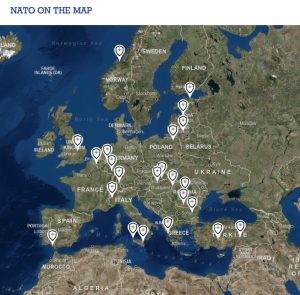
The Biden administration’s recent decision to allow Ukraine / NATO to fire missiles deep into Russian territory demonstrates the lies that the West have been claiming about NATO’s bases that surround Russia for the last couple of years. “Oh they are just defensive” they say. Until they aren’t, of course. So now we see Ukraine firing ATACMS into Russia, which can only be done with the direct involvement of NATO / USA.

According to the NYT:

The long-range missile — known as ATACMS and pronounced like “attack ’ems” — can strike targets 190 miles away with a warhead containing about 375 pounds of explosives. It can be fired from the HIMARS mobile launchers that the United States has provided Ukraine, as well as from older M270 launchers sent from Britain and Germany.

Apparently Biden is no longer trying to prevent World War III. I’ve heard it explain, by people like Jeffrey Sachs, that the Biden administration figure Putin figures that Trump will put an end to it in a month, so there’s no point launching nukes. Meanwhile, the hawks in the Pentagon and Biden administration get to have some fun blowing shit up.

By the way, as I heard someone say recently, can you imagine how Russians feel about German tanks being in Ukraine after the history Russia had in the 20th century with German invasions? Especially when part of the agreement about NATO not expanding if Russia allowed a re-united Germany was the fear of exactly that?


And the whole argument that NATO bases are “for defense” would ring a little hollow to Russian ears. Apart from the fact that it isn’t true, as they can obviously easily be used for firing missiles into Russia (as per Ukraine), they could also be used to prevent a retaliation from Russia in the event of a first strike from the West.
2024-11-18

2024-11-18

“At the moment that the “normal” police and military resources of the bourgeois dictatorship, together with their parliamentary screens, no longer suffice to hold society in a state of equilibrium — the turn of the fascist regime arrives. Through the fascist agency, capitalism sets in motion the masses of the crazed petty bourgeoisie and the bands of declassed and demoralized lumpenproletariat — all the countless human beings whom finance capital itself has brought to desperation and frenzy.”

Excerpt from
Fascism: What it is and how to fight it (1944)
Trotsky, Leon

I’ve been thinking about “all the countless human beings whom finance capital itself has brought to desperation and frenzy” and my mind went back to the Occupy Wall Street movement of 2011. Obama’s America.

What did Trump have to say about that at the time?

From the Daily News, 13 December 2011:

Trump on Occupy Wall StreetTrump on Occupy Wall Street 14 Dec 2011, Wed Daily News (New York, New York) Newspapers.com

And what did Mr Hope and Change Obama have to say about them? He said some words. But he tried to play both sides.

“I understand the frustrations that are being expressed in those protests,” Obama said in an interview with ABC News on Tuesday. “The most important thing we can do right now,” he added, is “letting people know that … we are on their side.” When he first expressed sympathy for the Occupy Wall Street movement two weeks ago, Obama added a characteristically cautious qualification: “We have to have a strong, effective financial sector in order for us to grow.”

Obama Occupy Wall StreetObama Occupy Wall Street 20 Oct 2011, Thu The Los Angeles Times (Los Angeles, California) Newspapers.com

When the Occupy Wall Street movement was forcibly dismantled by police in late 2011 and into 2012, Obama did not directly intervene to stop the crackdowns. Cities across the country saw coordinated efforts to remove protesters from public spaces, often using riot gear, tear gas, and mass arrests. The Obama administration did nothing. He also did nothing to stop the Supreme Court’s decision on Citizen United, which allowed for unlimited corporate spending in U.S. elections, from becoming law a year earlier.

Of course, I’m hardly the first person to connect the dots between Occupy Wall Street, the Tea Party, and MAGA. People have been doing it since at least early 2016:

There was a hunger for someone to provide a message like what Trump is offering—that the cozy Wall Street-Washington nexus cares nothing about them and it is time to take matters into their own hands and reject the blandishments of those who have put them in the state they are in. It was Trump’s genius to be able to understand and articulate that message, and to articulate a message that obliterates the traditional liberal-conservative ideological cleavages.

But I wonder how many young people today know much about Citizens United, the Tea Party and Occupy Wall Street. I haven’t seen much analysis in the media connecting those dots to Trump’s recent victory. A quick search of the New York Times for “trump occupy Wall Street” in the last year comes up exactly nothing relevant. Nothing much comes up for “trump citizens united”, either. It’s like they don’t want to state the obvious – that the combination of unlimited corporate campaign funding and an angry, disenfranchised and ignored working class came together in the Obama years to create Trump’s second term.

American Hypocrisy over Tariffs

Me: I want to talk about the logic behind tariffs. The Biden administration just introduced a whole bunch of new tariffs on products coming out of China and that seems to be in direct opposition to the idea of free trade and open markets. How does the US justify tariffs? What’s the logical framework they use?

ChatGPT:

The US justifies tariffs on several grounds, even though they contradict the principles of free trade and open markets. Here’s the logic they use:

1. Protecting Domestic Industries: Tariffs can shield nascent or struggling domestic industries from foreign competition. By making imported goods more expensive, domestic products become more competitive in the local market, supporting local businesses and jobs.

2. National Security: Some industries are critical for national security. The US argues that relying on foreign countries, especially potential adversaries, for essential goods like steel, semiconductors, or pharmaceuticals can be risky. Tariffs on these imports can incentivize domestic production.

3. Trade Deficits: Tariffs can be a tool to address trade imbalances. The US has a significant trade deficit with China. By imposing tariffs, the government aims to reduce this deficit by making Chinese goods more expensive and thus less attractive, encouraging consumers to buy domestically produced items.

4. Retaliation and Negotiation: Tariffs can be used as a bargaining chip in trade negotiations. The US might impose tariffs to retaliate against unfair trade practices or to pressure other countries into changing their policies. It’s a form of economic leverage.

5. Revenue Generation: Tariffs also generate revenue for the government. Although this is less significant today compared to historical reliance on tariffs for funding government operations, it’s still a factor.

6. Economic Strategy and Industrial Policy: Tariffs can be part of a broader strategy to encourage specific sectors. For example, tariffs on certain tech products might be aimed at boosting the US tech industry’s competitiveness on the global stage.

In essence, while tariffs oppose the concept of free trade, they’re justified as a tool for protecting domestic interests, ensuring national security, correcting trade imbalances, leveraging negotiations, and driving strategic economic policies. Critics argue, however, that these measures can backfire, leading to higher prices for consumers, trade wars, and economic inefficiencies.

Me: But aren’t these the same basic arguments countries have always made for imposing tariffs and duties on foreign products? And aren’t they same arguments the US has tried to prevent other countries for using via the World Bank and IMF? 

ChatGPT:

Absolutely, these arguments have been around for centuries and are indeed the same ones the US and other countries have historically used to justify protectionist measures. The irony is palpable, especially considering the US has been a vocal proponent of free trade through institutions like the World Bank and the IMF. These institutions often encourage or even pressure developing countries to lower tariffs and open up their markets, promoting the benefits of free trade.

Here’s the nuanced breakdown of this irony:

  1. Historical Consistency: The US, like many other countries, has long used tariffs to protect its industries, especially during its early industrialization period. The arguments for protecting nascent industries and securing national interests are timeless and have been part of economic policies for centuries.
  2. World Bank and IMF Policies: The World Bank and IMF, heavily influenced by the US and other developed nations, have promoted policies of economic liberalization and deregulation in developing countries. These policies often come with the rationale that open markets lead to greater efficiency, economic growth, and integration into the global economy.
  3. Selective Application: The US has often applied different standards domestically versus internationally. Domestically, it might impose tariffs to protect specific industries or address strategic concerns. Internationally, it promotes free trade, arguing that it leads to overall global economic growth and stability.
  4. Strategic Interests: When pushing for lower tariffs abroad, the US and its allies argue that open markets benefit everyone in the long run by creating more competition, lowering prices, and fostering innovation. However, when it comes to its strategic interests, the US is quick to revert to protectionism, showing a dual approach based on context and interests.
  5. Realpolitik in Trade: International trade policies are often driven more by realpolitik than by ideological consistency. Countries, including the US, tailor their trade policies to their strategic economic and political interests, even if it means appearing hypocritical.

In summary, while the arguments for tariffs have remained consistent over time, the selective application of free trade principles versus protectionist measures highlights the pragmatic and often self-serving nature of international trade policies. The US, like many other countries, uses whatever tools and arguments are most advantageous for its current economic and strategic needs, even if it means contradicting its own advocacy for free trade.

American Hypocrisy Over China

I’m not an expert on world trade disputes, but it seems to be that the U.S.A.’s current whining about Chinese manufacturing is pathetic and hypocritical. American manufacturers, with the full support of the U.S. Government, has spent 40 years outsourcing their manufacturing to China in order to benefit from lower Chinese wages and TCO, so they could sell their cheap products to the world. Those same policies that benefited U.S. companies in the past now pose an economic threat, as Chinese companies make and sell their own goods to the world. There’s a stunning level of hypocrisy criticising China while having benefited from these manufacturing dynamics, but try to find that perspective articulated in the mainstream U.S. media. Instead they just continue to act as the P.R. arm of the U.S. government and its corporate owners.

And surely we want the world for have as much cheap, high quality green energy products as possible, don’t we? On one hand, the U.S. government says that climate change is a top global priority – on the other hand, they don’t want China to produce too many products to solve the problem.

Me:

The U.S. government is complaining that China is “creating an oversupply of clean energy products”. They are also complaining that China is “overproducing” products and “dumping” them on global markets. This seems churlish to me. I thought the US believed in “open markets” and capitalism? Don’t the US also use tariffs and government funding to make their manufacturers more competitive?

ChatGPT:

You’re picking up on the contradictions that often emerge in international trade rhetoric. The U.S. has long championed open markets and free trade, but that support is sometimes tempered by national interests and the desire to protect domestic industries.

Let’s break down the criticisms you’re mentioning:


      1. Oversupply of Clean Energy Products: China has heavily invested in clean energy manufacturing, like solar panels and batteries. The oversupply issue is essentially that China can produce more than the global market demands. This drives down prices, benefiting consumers and countries looking to transition to renewable energy but also putting pressure on non-Chinese manufacturers who struggle to compete with lower-priced imports.

      1. Dumping Allegations: Dumping refers to selling products abroad at prices below their normal value (often below production costs) to capture market share. Critics in the U.S. argue that China’s subsidies and state support lead to artificially low prices that damage U.S. manufacturers.

      1. U.S. Use of Tariffs and Subsidies: Yes, the U.S. has its own protectionist policies, such as tariffs and subsidies. The Inflation Reduction Act of 2022, for instance, incentivizes U.S. clean energy manufacturing, while tariffs imposed during the Trump administration continue to impact trade with China.

    In essence, while the U.S. preaches free markets, it’s not above using government interventions to protect its industries. The complaints about China are often rooted in the notion of maintaining a “level playing field,” where countries are expected to follow a similar set of market rules. However, these rules are often defined through political and economic lenses that favor the rule-maker’s interests.

    These dynamics reflect broader tensions in global trade, where the line between fair competition and protectionism becomes blurry, especially with strategic sectors like clean energy.

    Me:

    Can you give me examples of where the US used its economic and military power to make sure its manufacturers didn’t have to worry about a “level playing field”?

    ChatGPT:

    The U.S. has often wielded its economic and military power to protect and advance its manufacturers’ interests, sometimes at the expense of the concept of a “level playing field.” Here are a few notable examples:


        1. Marshall Plan (1948-1952): After World War II, the U.S. implemented the Marshall Plan to aid Western European reconstruction. While it provided crucial support for European economies, it also tied many of the aid recipients to American products and markets. The plan ensured European countries remained aligned with U.S. interests and created a favorable trading environment for American manufacturers.

        1. Operation Ajax (1953): The CIA-backed coup in Iran removed Prime Minister Mohammad Mossadegh and reinstated the Shah. The overthrow protected U.S. oil interests and their control over Iran’s oil resources, ensuring that American and British oil companies retained profitable operations in the region.

        1. Intervention in Latin America: Throughout the 20th century, the U.S. supported coups and regimes in Latin America to ensure stability favorable to American businesses. In Guatemala (1954), the U.S. supported a coup to protect United Fruit Company’s interests after land reform threatened its dominance.

        1. Trade Agreements and WTO Disputes: The U.S. has leveraged its negotiating power in international trade agreements like NAFTA and the WTO to secure preferential treatment for its manufacturers. At the same time, it has challenged other countries at the WTO for practices that disadvantage U.S. companies, winning cases like the one against China for rare earth export restrictions.

        1. Tariffs on Japanese Electronics and Cars (1980s): As Japan became a significant competitor to the U.S. in cars and electronics, the U.S. used tariffs and quotas to restrict Japanese imports and protect its own manufacturers.

        1. Recent Trade Wars with China: The U.S. imposed tariffs on a wide array of Chinese goods to counter what it claimed was unfair competition due to Chinese government subsidies, currency manipulation, and intellectual property theft. The tariffs effectively protected certain U.S. industries, even as they strained global supply chains.

      These actions demonstrate how the U.S. has historically prioritized its national and economic interests, often invoking the language of free markets but frequently resorting to state intervention, military action, or diplomatic leverage to secure advantages for its industries.

      Using ChatGPT to Analyse The News

      One of my hobbies at the moment is to use ChatGPT to help me analyse the news. I imagine this will be come pretty standard in the near future, and there will be better tools to use. At the moment it seems the ABC has blocked ChatGPT from reading its articles, so I have to copy and paste the article into GPT. But then I run a couple of prompts to get it to breakdown the story for me. My basic objective is to get GPT to act as a second brain, helping me uncover the biases in news stories and highlight the gaps in the coverage.

      Here’s GPT’s analysis of a recent ABC article about the US and Israel. It gave the original article a rating of 6 our of 10 for journalistic quality.

      America Doesn’t Give A Fuck About Democracy

      The current situation between Iraq and the US is quite revealing. In 2003, when the US illegally invaded Iraq, it initially pretended it was doing so to protect the world from Saddam Hussein’s WMD. When it became clear that he never had any WMD (as many Iraq analysts had already been saying before the invasion), the US pivoted to argue they were invading to remove Saddam and bring the gift of democracy to the Iraqi people.

      Now we see the democratically-elected government of Iraq requesting the US remove all of its troops from their country – and the US is flatly refusing. We can infer from this that the US has no respect for democracy, or the government of Iraq or the Iraqi people or, by extension, any other government or people whose interests are in disagreement with those of the United States.

      In essence, the US is forcing its military presence upon the Iraqi people – again. I’m pretty sure that’s tantamount to a declaration of war. But this time, there is no Saddam, no WMD mirage. The US’ interests are laid bare. They want a military presence in the world’s third oil-producing nations and they don’t give a flying fuck what the Iraq people think about it. And they don’t give a flying fuck about democracy, either. That’s always been a ruse.

      Do you know what kind of person doesn’t care about the rights of others? Psychopaths.

      When the government of a country doesn’t care about the rights of others, it is a psychopathic government.