This article on the neuroscience of trust raises some interesting questions regarding testosterone and psychopathic behaviour. One of the key characteristics of psychopaths is their lack of empathy which, as it turns out, is also a side-effect of high testosterone:
High testosterone convinces the brain that others find you desirable and socially powerful. It also inhibits the brain’s release of oxytocin, reducing empathy and the desire to collaborate. What’s more, testosterone’s aggression is contagious, inhibiting oxytocin and trust in team members.
In my book “The Psychopath Economy”, I don’t get much into what makes people psychopaths, I just assume they do, and will always, exist. But this article made me do some further reading on the link between psychopaths and testosterone. At least one study in the last decade concluded that “psychopathy scores were associated with an increased ratio of testosterone (baseline) to cortisol responsivity to a stressor. Psychopathy was not associated with either of these measures independently, or with baseline cortisol levels. These findings suggest that these highly interconnected hormone systems may work in concert to predispose to psychopathy.”
Another recent study looking at emotional control found that “people with psychopathy, and especially in patients with high endogenous testosterone levels” demonstrated “significantly less activity in the prefrontal brain regions and less communication between the prefrontal brain and the amygdala was observed”.
Four Corners has a story about slavery in our supply chain. Do Western manufacturers know (or care) about the practices of their supply chain? Should Western governments do something about it? According to Four Corners the Australian government recently passed something called The Modern Slavery Act 2018, which “requires businesses of a certain size to report their efforts to keep their supply chains slavery-free”. Unfortunately, the government “has the power to publicly name those that fail to comply, but not to fine or penalise them in other ways. It is hoped fear of shaming will be enough incentive to avoid the reputational, financial and other risks that might arise from public scrutiny.” The problem with shaming is that psychopaths (and, by extension, the companies they run), are pretty impervious to shame. All they care about is winning. They don’t give a shit what you think about them.
Why would the government not put throw-the-book-at-them penalties in place for slavery in the supply chain?
According to antislavery.org “an estimated 25 million people around the world are in forced labour” and it generates US$150 billion in profits for the private economy every year.
I’ve been saying it for 20 years. If you want political influence in a democracy, you need to control the media. That’s why I started TPN. That’s why Murdoch is king. Don’t blame the voters. They get their opinions from the media. Don’t blame the politicians. They were chosen by the media to do a particular job. It’s the media. If we want change, we need to control the media. We need to invest in independent media. Not the ABC. Truly independent media. That’s why you don’t want advertising to find your podcasts. That’s why you don’t want VC firms to invest in New Media. That’s why you don’t want Facebook to be the new publishing platform. Those things just subvert the opportunity to wrest control of the future from the rich white psychopaths.
What can you do? You can make the media. Make podcasts. Write blog posts. Write books. Make documentaries. Make comics.
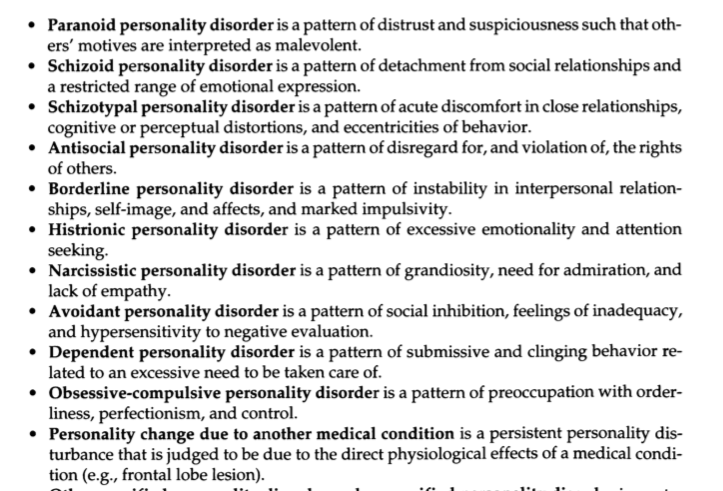
Well it’s officially election time once again in Australia, so pull out your official Politician Personality Disorder Bingo cards and see which politicians match the personality disorders from the DSM-5!
Is ScoMo more Histrionic or Narcissistic?
Is BarJoy more Dependent or Antisocial?
You be the judge! No psychiatric qualifications necessary, as this is the national sport that replaced two-up. Winners will get a free trip to Canberra on May 18 to watch both the winners and the losers put the full force of their disorders on public display. Second place will get a free copy of my book The Psychopath Economy. Fun for all the family!
Since then, The Guardian invited me to write some stuff about the latest series. They edited down my full comments, so here’s the full version:
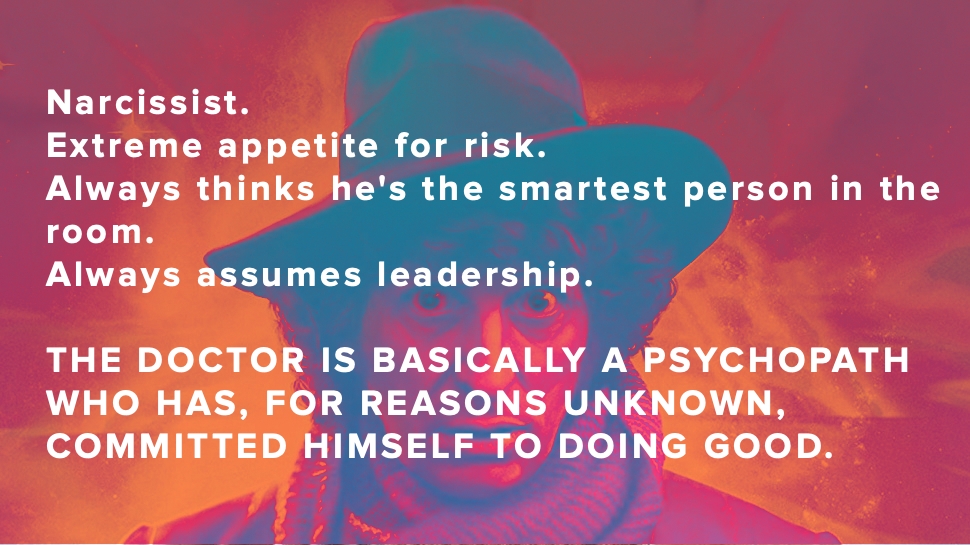
For fifty years, The Doctor, even in his most pleasant of incarnations, has had a singular trait – he is a psychopath. Not the serial killer type of psychopath, which psychiatrists report are a very small percentage, but the Steve Jobs type. He’s a benign psychopath. He’s a psychopath who, for reasons as yet unknown, has decided to use his intelligence for the benefit of others. And that is a large part of the joy in the character. A quick perusal of the PCL-R test for psychopaths (or what the DSM V might classify as an Antisocial/Psychopathic Personality Disorder) will suggest a list of behaviours that the Doctor definitely exhibits. For a start, he’s a complete narcissist. He always assumes (and insists) he is the smartest person in any room – and with good reason, because he is, of course, correct in that assumption. He has an extreme appetite for risk, always throwing himself (and, often, his companions) into danger, usually with a high degree of confidence that he’ll come out of it unscathed. He doesn’t really understand people or emotions and often needs a human to explain to him what emotions he should be feeling – or, at least, pretend to be feeling. During the Classic era, he would sometimes abandon a companion or other hangers-on without a moment’s thought for what that will do to them.
I was personally very excited to get a female Doctor. I loved Chibnall’s work on BROADCHURCH and hoped he’d cast Olivia Colman as The Doctor. Whittaker was a great second choice. I loved the outfit they chose for her and the overall look. I was very excited when I first saw the “key” teaser and had high hopes that Chibnall would bring the show back to its glory days, feeling like Moffat’s run with Capaldi was huge waste of the latter’s immense talent.
Unfortunately, from the very outset, I felt like Chibnall either doesn’t get the fundamentals of the Doctor’s inherent psychopathy, or has decided to write it out of this regeneration, making her a kinder, gentler, touchy-feely, kid friendly Doctor. Which is fine – he’s the show runner and it’s his prerogative to make the Doctor the way he wants her to be. But after a lifetime of Doctor Who fandom, at nearly 50 years of age, having to justify to my American wife why I continue to watch the show even during the poorly executed episodes (“because when it’s good it makes me cry! – don’t even mention the Van Gogh episode!”), I’ve given up and decided to sit out the rest of the Chibnall era. His Doctor doesn’t talk or act like the Doctor I have been watching since I was a child. She is full of self-doubt, indecisive, and wants a hug. That’s not my Doctor.
Toyota Motor Corp. will pay $1.2 billion to settle US criminal charges that it lied to safety regulators and the public as it tried to cover-up deadly accelerator defects.