by cameronreilly | Nov 25, 2024 | Podcast, Podcasting, TPN
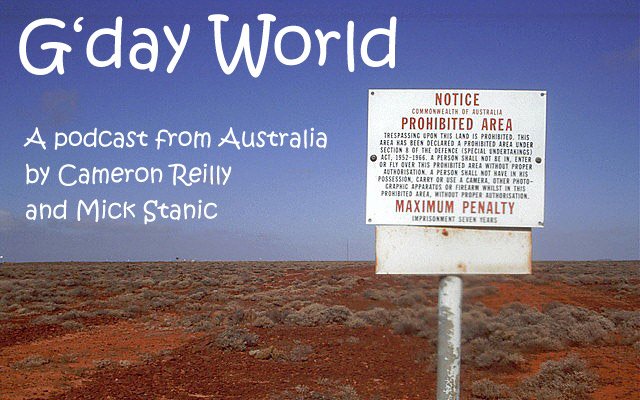
Twenty years ago today, way back in November 2004, I recorded my first podcast. It was the very early days of podcasting, which really kicked off in August 2004. I, along with my co-host Mick Stanic, recorded the first Australian podcast – “
G’Day World“. I was recently notified that some of the early episodes have been added to the
National Film and Sound Archive of Australia, “to represent the development and experience of podcasting in Australia, and to ensure that podcasts are available for future generations to listen to and research.” It’s also up on
archive.org.
One of our earliest G’Day World guests, who then became one of our launch hosts on The Podcast Network in February 2005, was BAFTA nominated broadcaster
Ewan Spence. He and I caught up recently to talk about the early days of podcasting and how it’s changed our lives.
by cameronreilly | Dec 7, 2022 | Podcast, TPN
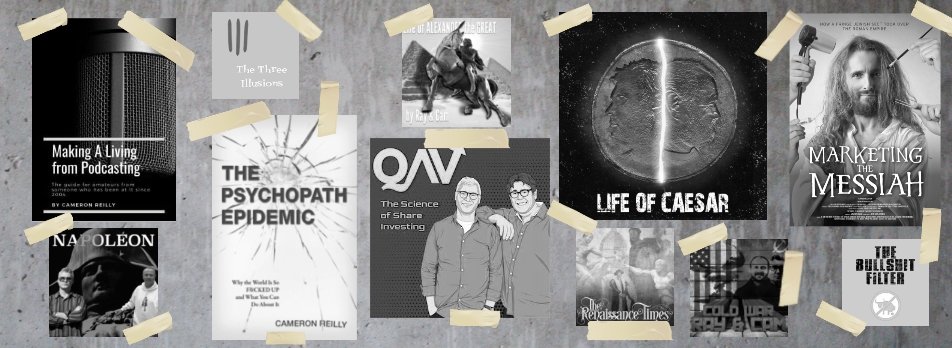
Nine years ago today, Ray Harris and I started our podcast about Julius Caesar. Every month since then (that’s 108 months and roughly 400 hour long episodes in case you’re wondering), we’ve told stories about the Julio-Claudians (aka the Caesars – Julius, Augustus, Tiberius, Caligula, Claudius, and Nero) in insane detail. And today – it ends. We have published the last episode of Nero and that’s the end of the line for this series. We’ve officially hung up our togas.
I didn’t know Ray from a bar of soap when we started nine years ago… and I still don’t. And don’t care to. Kidding. He’s been a joy to work with over nine years and we continue to work together on our series about the Cold War, the Renaissance, and the Bullshit Filter.
This series has been the hardest I’ve ever worked on anything. It taught me a whole new way of working. For many years, I would spend all day working on my ‘real’ job, and then at night, after dinner, I would sit down with my books and make notes for several hours a night (usually from about 8pm – midnight). I’d do that five nights a week, then record the next day, take a couple of nights off, and then start the process all over again. FOR YEARS and YEARS. It was only when I could afford to shut down my day job that I could work less in the evenings and do more of it during the daytime.
Fortunately, I loved the work, and Ray and I had a ton of fun doing it. We’ve learned a lot, we’ve laughed, we’ve loved… we’ve travelled across Europe and the USA, Ray’s been to Australia with his family… it’s been a wild ride. And it consumed up nearly a fifth of my life. It’s the longest “job” I’ve ever had…. sitting in my undies, making Ray wet his pants.
Thanks to everyone who has been on the journey with us, especially to those who have supported us financially. We couldn’t have kept it going without you. And thanks to our spouses, who don’t LISTEN to the show (thank god), but allowed us to do work on it, despite it seeming like the greatest waste of time and energy for many years.
And here it is.
by cameronreilly | Nov 6, 2022 | Podcasting, TPN
I’m coming up to the 18th anniversary of G’Day World in a couple of weeks. It was my first podcast, and the first Australian podcast ever. Blah blah blah. But I was shocked tonight to learn that the guy I started it with, and then started the world first podcast network with a few months later, Miroslav Mick Stanic, passed away in early 2020 at the age of 51. Apparently he had early onset dementia.
Mick and I were introduced by my old Microsoft mate Frank Arrigo at some point after I left Microsoft in July 2004. We would catch up for breakfast from time to time. When I mentioned on my old Typepad blog that I was thinking about starting an Australian tech podcast, Mick put up his hand to help. And I couldn’t have done it without him. I knew nothing about how to host an mp3 on a website. And as he was living in Sydney at the time, the two of us had to figure out how to record a Skype call and edit it together. There wasn’t any software to record Skype calls in those days and nobody had done it before, so we had to kludge something together using sticky tape and string.
Together we innovated and developed the podcasting medium. We were the first to record a podcast over Skype, the first to start a podcast network in February 2005, the first people to ever sell advertising on a podcast (I’m sorry) and the first people to record podcast interviews. It was a crazy, exciting time.
Sadly the relationship didn’t last very long. We parted ways a year later and that was the last time I spoke to him or heard anything about him. So when I had the urge to look him up tonight, to see what he was up to, and maybe record a special reunion podcast, I was shocked to learn of his passing, and doubly shocked that nobody had told me about it.
Old podcasting colleagues from the early days of TPN like Ewan Spence and Wayne Turmel might also want to make a toast to him.
So… cheers, Mick. Thanks for everything. Our brief friendship really was a catalyst in my life.
by cameronreilly | May 19, 2019 | activism, Australia, Australian media, Australian politics, Culture Jamming, media 2.0, Podcasting, Politics, propaganda, psychopaths, The Psychopath Epidemic, TheWarOnYourMind, TPN, You Are Blind
I’ve been saying it for 20 years. If you want political influence in a democracy, you need to control the media. That’s why I started TPN. That’s why Murdoch is king. Don’t blame the voters. They get their opinions from the media. Don’t blame the politicians. They were chosen by the media to do a particular job. It’s the media. If we want change, we need to control the media. We need to invest in independent media. Not the ABC. Truly independent media. That’s why you don’t want advertising to find your podcasts. That’s why you don’t want VC firms to invest in New Media. That’s why you don’t want Facebook to be the new publishing platform. Those things just subvert the opportunity to wrest control of the future from the rich white psychopaths.
What can you do? You can make the media. Make podcasts. Write blog posts. Write books. Make documentaries. Make comics.
TAKE CONTROL.
by cameronreilly | Jan 20, 2015 | history, Podcasting, TPN
About seven weeks ago, I launched my latest project – The Life Of Alexander The Great history podcast, with my partner, the ever-polite southern gentleman, Ray Harris.

We are trying something different this time – this history podcast is subscriber-only. The first episode is available for free as a taste-test, but the rest of the series is available only to subscribers. This is pretty unusual for podcasts, which are usually either totally free or operate with a freemium model, whereby you have the main series which is free, then you have to pay either for special VIP episode or for archived episodes. There is also advertising as a revenue model – but I already experimented with podcast advertising during my days running The Podcast Network v1, and I know the pitfalls of it. I decided that for podcasting to work as a business, it has to be paid for by the listeners.
We decided to test out the subscriber-only model because we figured it’s about time people started to think differently about podcasts. Ray & I collectively put about 80 – 100 hours of work into the Life Of Caesar (our other history podcast) each month and it’s a hell of a lot of effort. And we do that show for free. So to add another series on top of that, with the same amount of work, we needed to start to earn a buck out of it.
Of course the big question is always “will people pay for content they are used to getting for free?” We are all familiar with the attempts of large media companies to put their content behind paywalls and how poorly they have (apparently) worked out. On the flipside, though, people are used to paying a small amount of money for content services these days – iPhone apps, tracks in iTunes, Spotify, Netflix, etc. Our question is whether or not people would be prepared to pay a small amount each month to listen to more content from us?
We figured that it was worth an experiment – nothing ventured, nothing gained. For a few months we had been asking people to sponsor Life Of Caesar on a volunteer basis. Nearly 200 people had generously volunteered to contribute and the average amount seemed to be about $5 per month, so we wanted to see what percentage of our Caesar audience would be prepared to pay us that amount to produce more content.
My guess was that only a small percentage of our listeners would come on board – my goal was to reach 10% of our regular listeners (which I think is in the region of about 12 – 15,000 people, although podcast stats are hard to get a handle on – in total, the Caesar show gets about 120,000 mp3 downloads a month, but each new episode gets about 12 – 15,000 downloads) – so about 1000 subscribers would be a great result.
For a few years, Kevin Kelly, founding executive editor of WIRED Magazine, has been promoting this idea of 1000 True Fans:
“The gist of 1,000 True Fans can be stated simply: A creator, such as an artist, musician, photographer, craftsperson, performer, animator, designer, videomaker, or author – in other words, anyone producing works of art – needs to acquire only 1,000 True Fans to make a living.”
We like that idea. 1000 people sounds like a reasonable goal. Out of the million people who have enjoyed our previous podcasts for free over the last ten years, we hope we can find 1000 True Fans who are willing and able to support our work.
Fortunately, so far it’s been going very well. In the first six weeks we had over 300 people subscribe to the show and the feedback from them has been extremely positive. The show generated about $7000 USD in the first month. Okay – we’re probably never going to get rich off of this, but isn’t our goal. Still – $7000 is by far the most money I’ve ever received from listeners in one month. In ten years of podcasting, I’ve never even come close to that kind of support.
Our goal is to make a reasonable living from podcasting. If Ray and I can both get to a point where we are producing several series a month and earning a livable wage from it, I know we’ll both be very happy. This is what we love to do and apparently some people like to listen to what we do. Now – some people seem to think that’s ridiculous. I’ve had some email recently from people basically suggesting I’m a total douchebag for wanting to earn a living out of podcasting. My reply is always the same – do you go to work every day for free? Of course you don’t. So why should we?
The other argument I hear often is “people won’t pay for something they expect for free”. And I agree – most people won’t. But there are exceptions – the true fans. If you have some true fans and they really, really enjoy your schtick (and that’s important – for this to work, people really need to want to hear our content over and above all of the free content), then they seem to be willing to throw us the price of a cup of coffee for ~4 hours of entertainment a month. I don’t think that’s too much to ask and apparently a few true fans don’t think so either. When someone emails me and says something like “why would I pay for your content when I can get great podcasts for free?”, I think “hey that’s cool, I get it, you’re just not a true fan, no problem”.
The hardest part of all of this was setting up the infrastructure to be able to handle a paywalled podcast. I needed a solution that would integrate hosting, membership and billing. Unfortunately, that solution doesn’t seem to exist off-the-shelf for podcasting. So I had to cobble something together, working with a couple of developers to integrate disparate systems until I had something that would work. I’m writing a “Guide To Making Money From Podcasting” that I’ll make publicly available in a few weeks that will make the process of pulling all of the components together easy for others.